
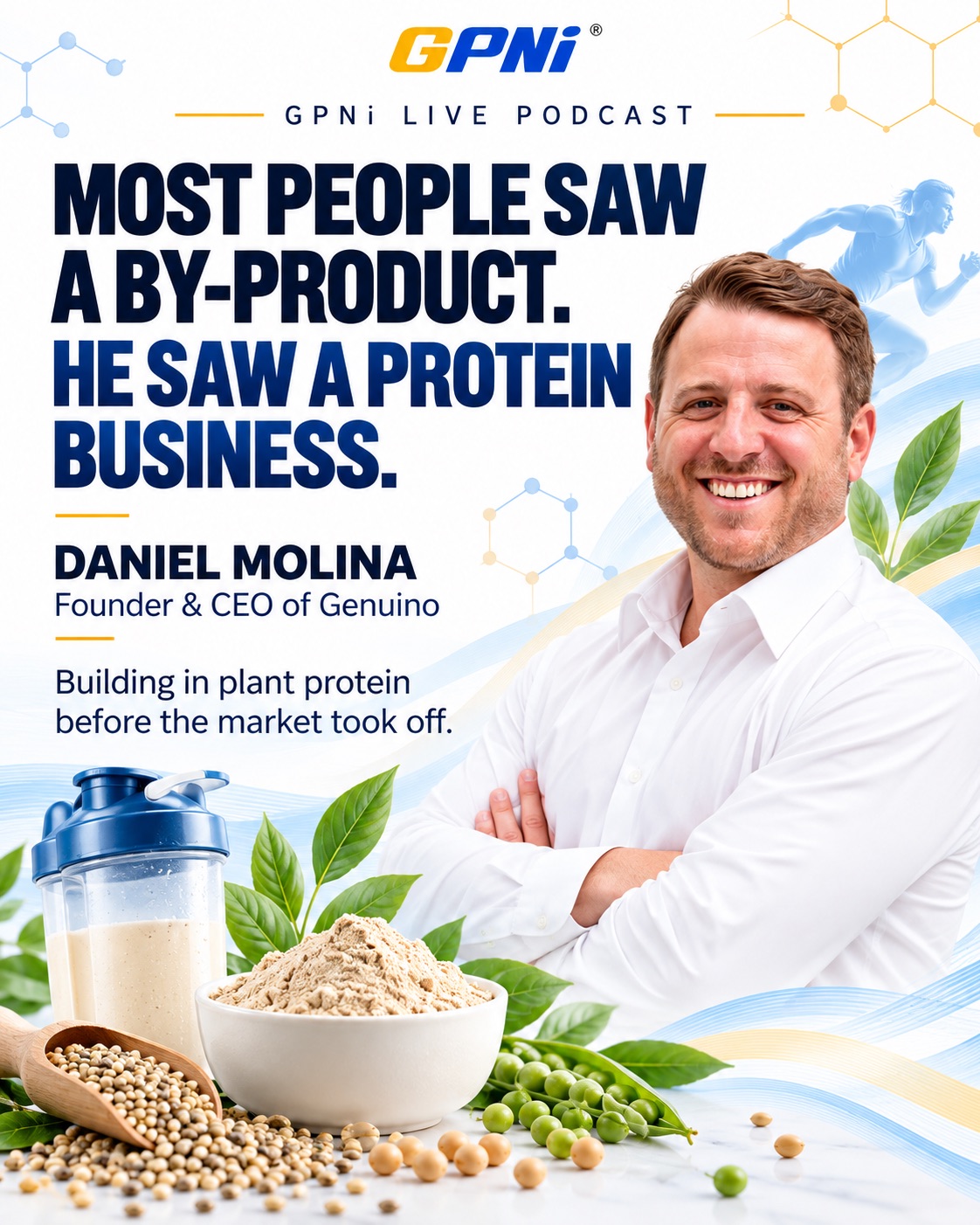
Most people saw a by-product.
Daniel Molina saw a protein business.
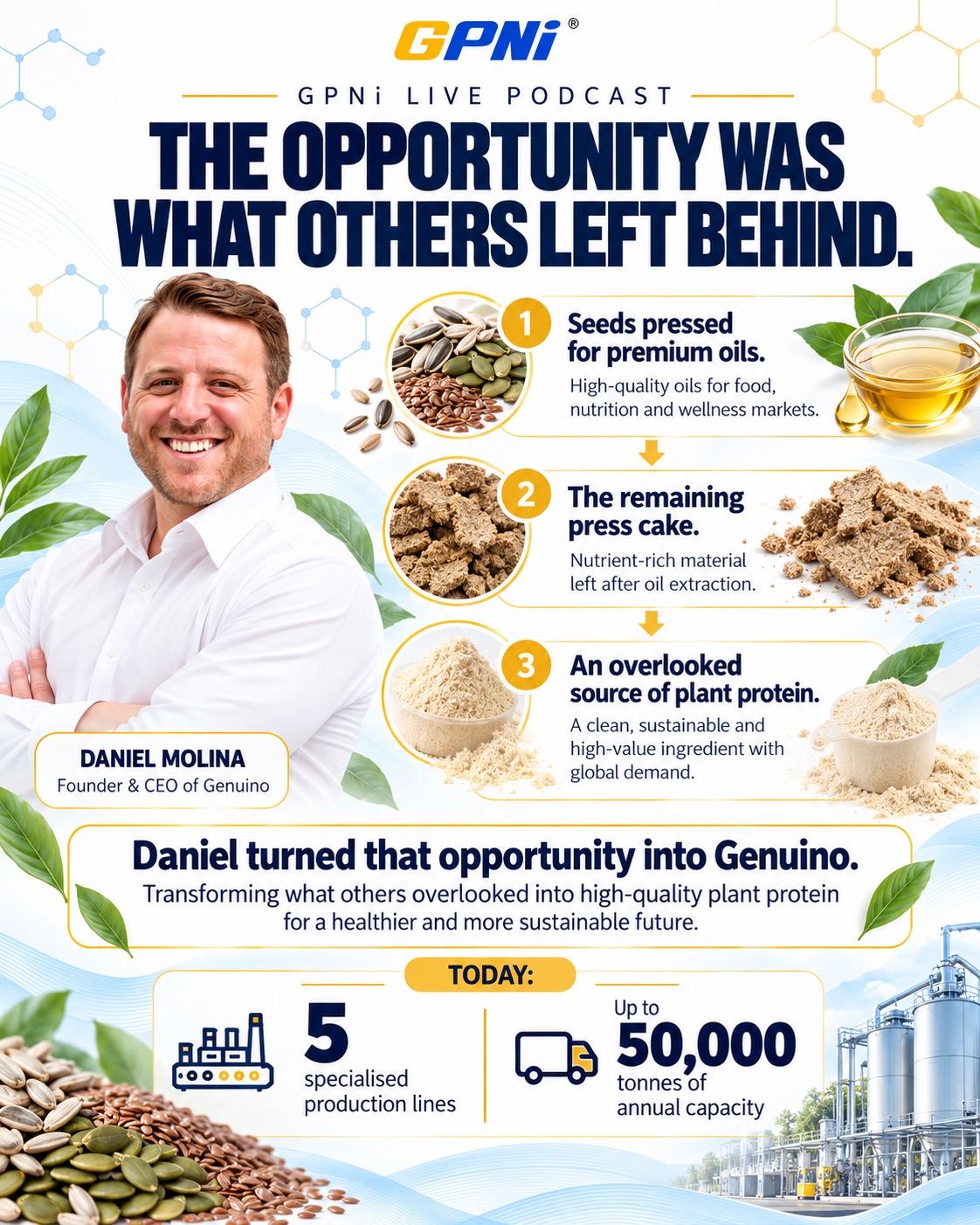
When seeds are pressed to produce oil, the material left behind is often treated as low-value press cake. Daniel recognised that it could be transformed into almond, hemp, sesame and other plant-protein ingredients.
This was not after plant protein became a global trend. It was fourteen years ago, when the category was still developing and customers often needed to be convinced that the opportunity existed at all.
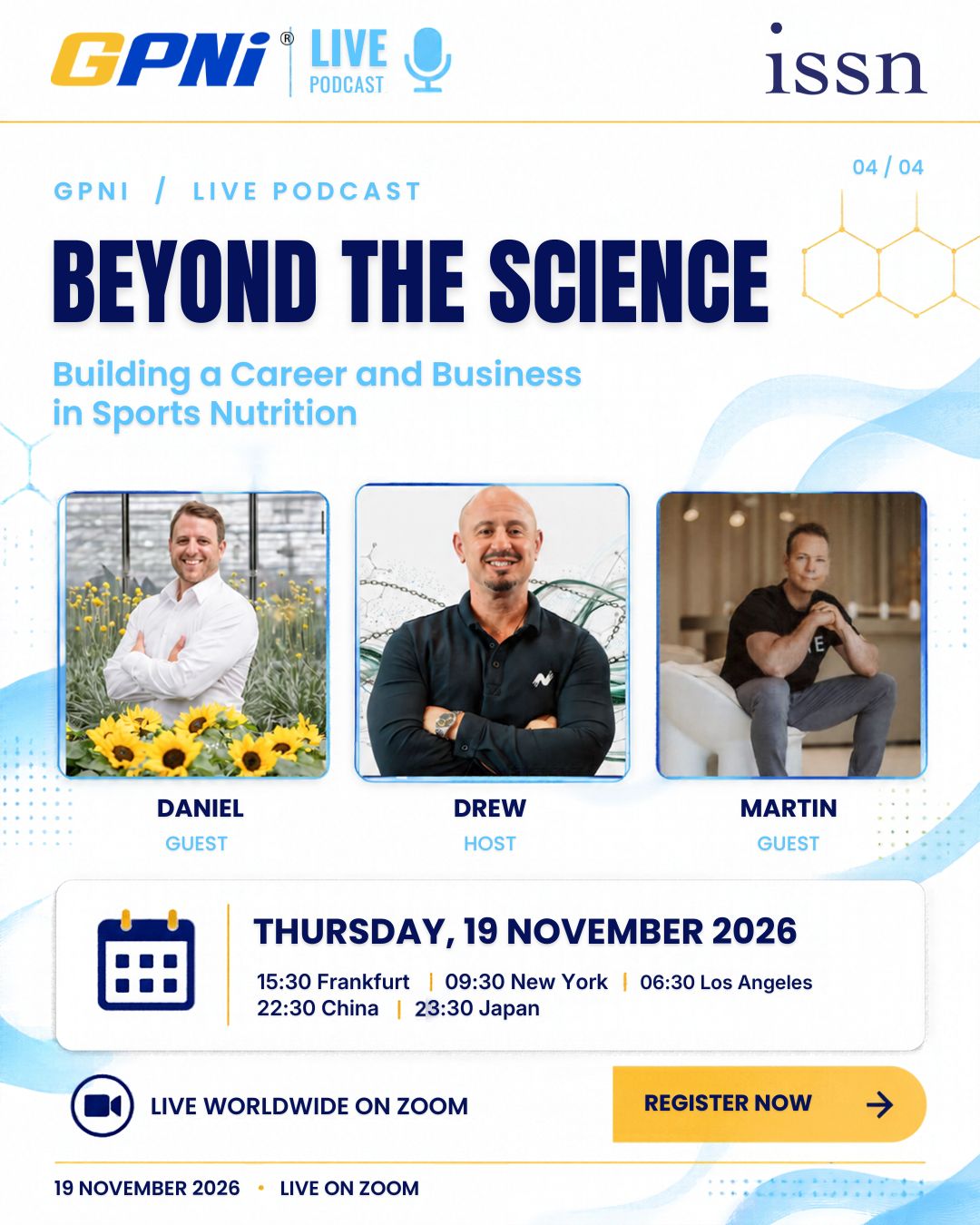
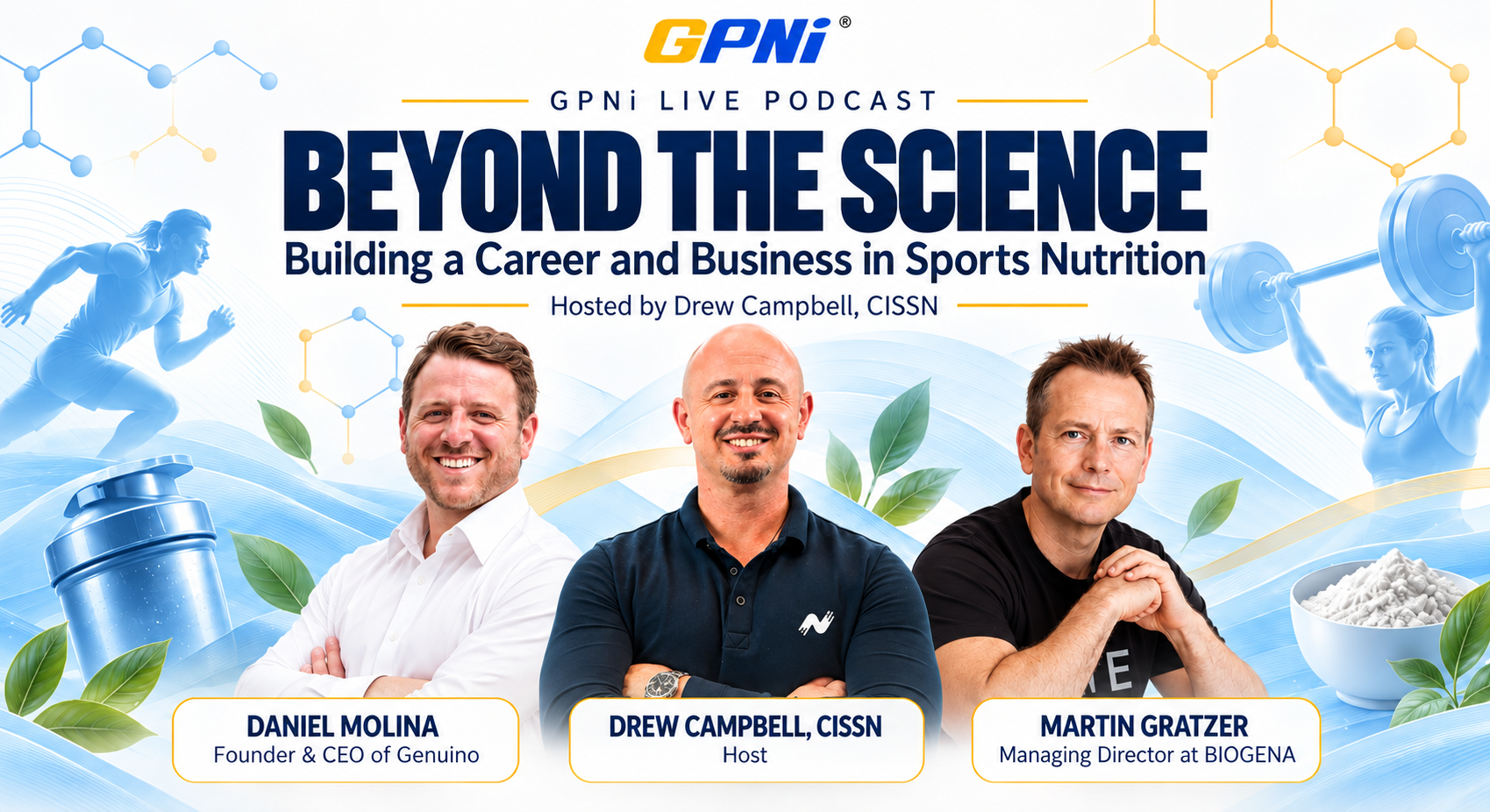
On November 19, Daniel will join GPNi live from Frankfurt to explain how an athlete’s interest in nutrition became an international ingredient business—and what building before the trend taught him about careers, products and entrepreneurship.
Beyond the Science: Building a Career and Business in Sports Nutrition
Date: Thursday, November 19, 2026
Time:
Germany: 3:30 pm CET / US East Coast: 9:30 am EST / US West Coast: 6:30 am PST / China: 10:30 pm / Japan: 11:30 pm
Platform: Live worldwide on Zoom
Host: Drew Campbell, CISSN
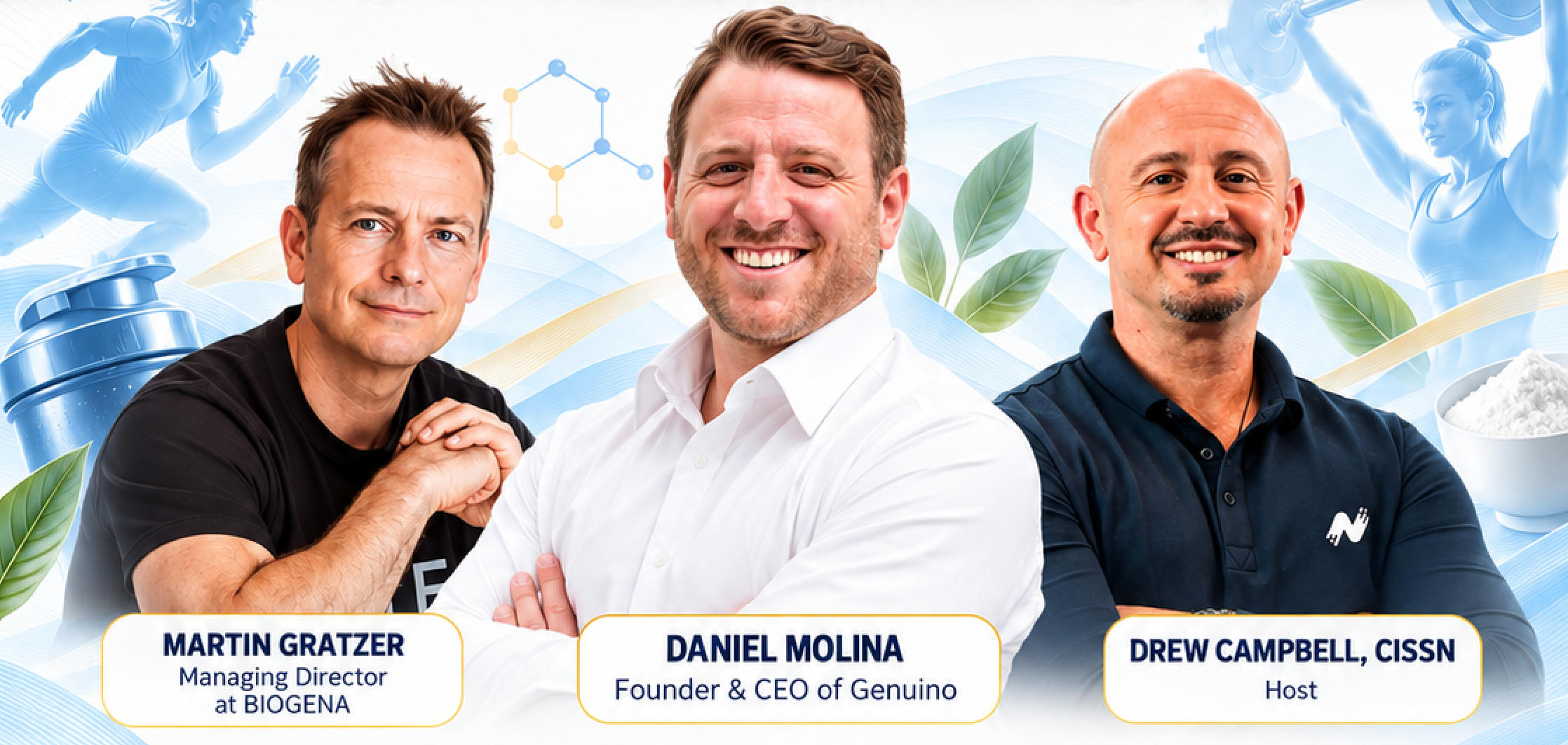
Guests: Daniel Molina and Martin Gratzer
Language: English, with AI-powered live translated captions
Registration: https://nxkkc.share-na2.hsforms.com/2asfMJ5WgQlqYiRNi6W2lCg
The Opportunity Was Hiding in Plain Sight
Daniel grew up playing football in the youth academy of Austria Vienna.
Sport taught him early that nutrition could affect training, recovery and performance. But his career would eventually take him much further behind the finished product—to the farms, raw materials, machinery and supply chains that make nutrition products possible.
His idea for Genuino started with premium seeds.
The seeds were carefully sourced and pressed to produce high-quality oils. Instead of discarding or undervaluing the remaining press cake, Daniel built a model that turned it into plant-protein ingredients.
What others viewed as waste became the centre of the business.
That sounds obvious only after someone has made it work.
Daniel had to identify the opportunity before the market was ready, explain the value to customers and build a system capable of delivering consistent ingredients at commercial scale.
Building the Part of Sports Nutrition Consumers Never See
Today, Genuino supplies food brands and manufacturers across Europe.
The company works across the full chain—from agricultural sourcing and oil milling to functional proteins and finished-product support. Its operation includes five specialised production lines and capacity of up to 50,000 tonnes per year.
Daniel also works with agricultural partners across Togo, Egypt and Austria, connecting different crops, markets and production systems. Through his company, he is a stakeholder in Europe’s largest oil mill.
This gives him a view of the industry that most consumers—and many practitioners—never encounter.
A finished protein product may look simple on a shelf. Behind it are decisions about raw materials, processing, functionality, quality, traceability, cost, manufacturing capacity and reliable supply.
If any one of those fails, the product may never reach the athlete.
Why This Matters to Performance Nutrition
Sports nutrition is not built only in laboratories or consultation rooms.
It is also built in fields, factories, quality departments, product-development teams and international supply chains.
A protein ingredient must offer nutritional value, but that alone is not enough. It must also perform in a formulation, remain consistent from batch to batch, meet safety and regulatory expectations, and be available in the quantity a growing brand requires.
Daniel works where those demands meet.
For nutritionists and coaches, his perspective reveals what happens before an ingredient reaches the label. For founders and product developers, it shows why a strong concept can still fail without the right production and supply strategy. For students, it exposes career paths that go far beyond direct nutrition practice.
The Career Lesson: Move Before the Opportunity Looks Obvious
Entering a mature category is one thing. Building while the category is still emerging is another.
Daniel did not have the benefit of a market that already understood plant protein. He had to help customers see why these ingredients mattered and how they could be used.
That required more than technical knowledge. It required timing, persistence, commercial communication and the ability to work across farming, production, logistics and sales.
His career offers several lessons:
- Look closely at problems and resources others ignore
- Do not confuse a clever idea with a viable business
- Learn how the entire value chain works—not only your part of it
- Make complex ideas understandable to customers
- Build reliability before trying to build scale
- Develop skills that connect technical knowledge with commercial decisions
Perhaps most importantly, Daniel’s story shows that opportunity often appears before there is a clear job title for it.
Careers Behind the Protein Label
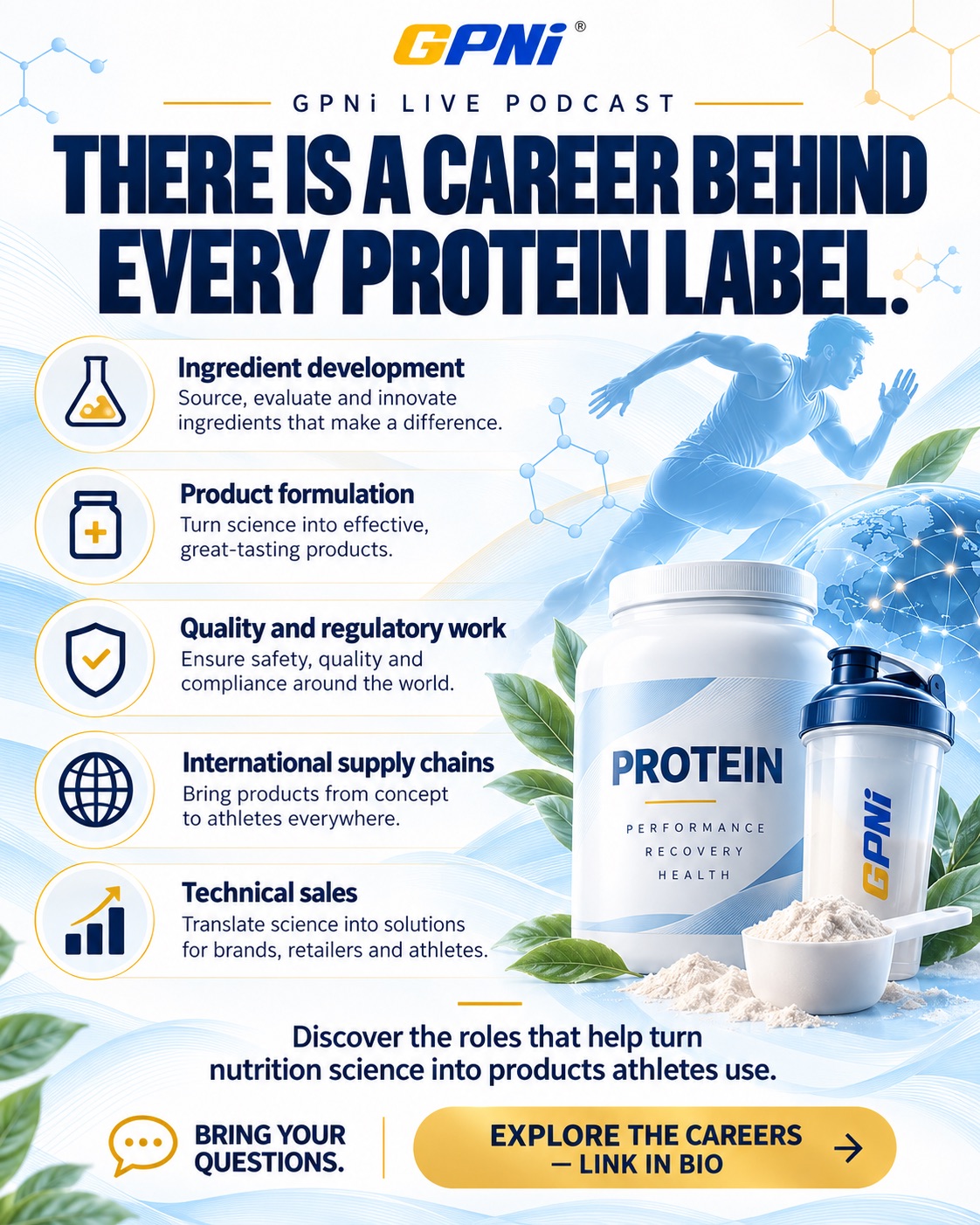
The sports and performance nutrition industry needs nutritionists—but it also needs ingredient specialists, product developers, quality professionals, regulatory experts, supply-chain managers, technical salespeople and entrepreneurs.
Many people never consider these roles because they see only the finished product.
Daniel can explain what happens behind that product, what kinds of people the industry needs and where new opportunities may be emerging across plant protein, functional foods and international ingredient supply.
Ask the Founder Directly
The live Q&A will allow participants to put their questions directly to Daniel, Martin and Drew.
You can ask Daniel how he recognised the opportunity, which decisions proved most expensive, what skills he values in employees and partners, or what he would do differently if he were entering the industry today.
You can also ask where plant protein is heading next—and how someone with a background in sport, nutrition, food science or business might find a place in that future.
Daniel’s story is not simply about turning press cake into protein.
It is about seeing value before other people do—and then doing the difficult work required to prove that you were right.
Join us live on November 19 to hear how he did it.










 Instagram
 Facebook
 YouTube
 Twitter
 Linkedin


