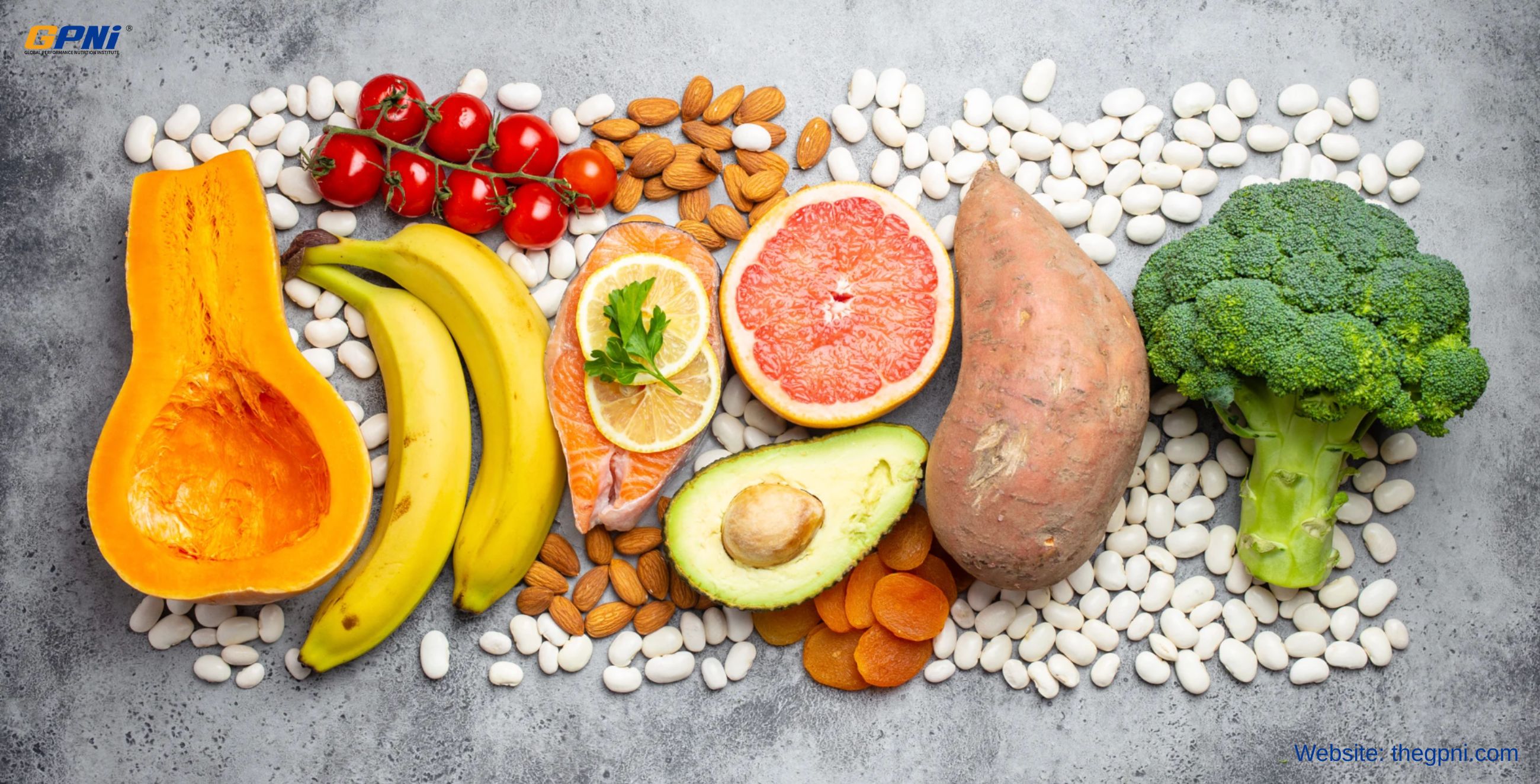
Training results are never determined by training alone.
Exercise selection, technique, training volume, and programming all matter. But behind the scenes, nutrition is constantly influencing how well a client performs, recovers, adapts, and ultimately progresses.
Energy intake, protein distribution, carbohydrate availability, pre- and post-training meals, hydration, and supplement choices can all affect the outcome of a training plan. This is why more coaches are beginning to take sports nutrition seriously—not as an optional extra, but as a core part of professional practice.
That does not mean every coach needs to become a registered dietitian, physician, or clinical nutrition specialist. It also does not mean stepping outside professional scope. But for coaches who want to provide a higher standard of service, sports nutrition can no longer be something they “sort of understand.” It is part of the foundation that connects training, recovery, and performance.
Here are five sports nutrition fundamentals every coach should understand.
1. Energy Intake Must Match the Goal
When coaches discuss training, the conversation often starts with exercises, sets, reps, and periodization. But when it comes to results, goals such as fat loss, muscle gain, weight maintenance, or performance development each require a different nutritional strategy.
If a client wants to lose fat but their daily intake consistently exceeds what is required for that goal, training harder may not solve the problem. On the other hand, if a client wants to build muscle but is chronically under-eating, the body may not have enough energy and nutrients to recover, adapt, and support lean mass gain.
This is one of the first nutrition-related skills a coach should develop: the ability to ask whether the client’s intake actually supports the stated goal.
Sometimes the issue is not that the program is poorly designed. The issue is that the nutrition strategy does not match the training outcome the client is chasing.
2. Protein Is More Than a Buzzword
Protein gets a lot of attention in both sports nutrition and general health—and for good reason. It plays an important role in repair, recovery, adaptation, and the maintenance or development of lean body mass.
But for most coaches, the first step is not to dive into complex metabolic pathways. It is to help clients answer three practical questions:
Are they eating enough protein overall?
Is protein distributed reasonably across the day?
Can their protein strategy fit their lifestyle long term?
Many clients already know that protein matters. They may buy protein powder, choose high-protein snacks, or try to eat more chicken, eggs, dairy, fish, lean meat, tofu, or legumes. But knowing that protein is important is not the same as knowing how to apply it consistently.
Protein is not just about one shake after training. It is part of the bigger recovery picture—and over time, it can influence how well a client responds to training.
3. Carbohydrates Are Performance Fuel
Carbohydrates are often misunderstood. In general fitness spaces, they are frequently reduced to a body weight conversation: “Will carbs make me gain fat?” or “Should I cut carbs to lose weight?”
But in training, carbohydrates have a much broader role.
For clients doing high-intensity training, endurance sessions, team sports, or repeated hard workouts, carbohydrates are a key fuel source. They help support training output, session quality, and recovery between sessions.
If a coach only views carbohydrates through the lens of fat loss, it becomes easy to miss their role in performance. Low energy, poor training quality, inconsistent output, and slow recovery may sometimes be linked to carbohydrate intake that does not match the training demand.
This does not mean every client needs a high-carbohydrate diet. It means coaches need to assess carbohydrates in context: the client’s goal, training intensity, training frequency, body composition target, recovery demands, and personal preferences all matter.

4. Nutrient Timing Is Not a Magic Window—But It Still Matters
Nutrient timing is often discussed in extremes.
At one end, some people treat pre- and post-workout nutrition as if every meal must be timed perfectly to the minute. At the other end, some people dismiss timing completely and argue that only total daily intake matters.
The reality is more practical.
Pre-training nutrition can influence how a client feels and performs during the session. Post-training nutrition can support recovery and help prepare the body for the next training session. The importance of timing depends on the person, the goal, the training schedule, and the level of performance required.
For a casual exerciser training three times per week, nutrient timing may not need to be complicated. For an athlete training twice per day, a client in a demanding fat-loss phase, or someone with a clear performance goal, timing can become much more important.
The International Society of Sports Nutrition has published position stand work reviewing nutrient timing in relation to exercising adults, especially highly trained individuals, performance, and body composition.
Good coaching means avoiding both extremes. Timing is not magic—but it is not meaningless either.
5. Supplements Require Judgment, Not Hype
Supplements are unavoidable in the fitness and performance world. Clients will ask about them. Brands will promote them. Social media will exaggerate them.
The coach’s job is not to memorize every product name or follow every trend. The coach’s job is to develop a basic decision-making framework:
What is the supplement supposed to do?
Is there evidence to support that effect?
Who might benefit from it?
What dose, timing, and context matter?
Are there safety, medical, sport-governing body, or individual tolerance considerations?
Creatine is a good example of a supplement with strong evidence for certain strength, power, high-intensity training, and lean mass contexts; the ISSN has described creatine monohydrate as highly effective for increasing high-intensity exercise capacity and lean body mass during training when used appropriately.
Caffeine is another example. It can support alertness and performance in many settings, but individual response varies. The ISSN position stand notes that caffeine can acutely enhance various aspects of exercise performance in many—but not all—studies, with commonly supported intakes often around 3–6 mg/kg body mass.
This is why supplement knowledge needs to be practical, evidence-based, and responsible. Sports nutrition and supplement strategy are not the same as medical nutrition therapy. Coaches need to understand what they can discuss, what they cannot claim, and when referral to a qualified healthcare professional is appropriate.
What Good Sports Nutrition Education Should Give a Coach
For coaches who want to go deeper into sports nutrition, the goal is not to collect endless facts. The goal is to build better judgment.
A strong sports nutrition education should provide three things.
A Clear Framework
Training, nutrition, recovery, hydration, and supplementation are connected. They should not be learned as random, isolated topics. Coaches need a structure that helps them understand how these pieces work together.
Real-World Application
Clients rarely ask textbook questions. They ask things like:
“Why am I not losing fat?”
“Why do I feel flat in training?”
“Why am I always sore?”
“Should I take creatine?”
“Do I need carbs before training?”
If education does not help coaches answer real-world questions more clearly, it remains theory on paper.
Better Critical Thinking
The value of education is not just knowing more terminology. It is being able to separate basic principles from personal opinion, evidence-based practice from social media noise, and useful tools from marketing hype.
Not every coach needs to make nutrition their main professional identity. But every coach who works with active clients can benefit from understanding the basics of sports nutrition more systematically.

ISSN-SNS: A Strong Foundation for Coaches
The ISSN-SNS, or Sports Nutrition Specialist certification, is positioned as an applied sports nutrition pathway for coaches, trainers, and fitness professionals who want to build a more structured understanding of sports nutrition and supplementation.
According to the ISSN, personal trainers may provide general sports nutrition information or education for the purpose of enhancing physical performance and body composition, while professionals should check local regulations before providing nutrition counseling that may involve medical nutrition therapy.
The SNS certification is not designed to turn a coach into a clinical nutrition professional. Instead, it provides working knowledge for those who want to better understand nutrition, training adaptation, recovery, and supplement strategy. The ISSN also notes that the SNS does not provide the education required to work with patients who require medical nutrition therapy.
Through GPNi®, the PNE Level-1 + ISSN-SNS Double Certification is positioned as a foundation sports nutrition certification and a lead-in to the more advanced CISSN pathway. The course includes eight modules, 70+ hours of course duration, English-language content, and preparation for the ISSN-SNS exam.
For coaches who want to connect nutrition science with practical coaching scenarios, this can be an ideal starting point.
CISSN: A More Advanced Sports Nutrition Certification
The CISSN, or Certified Sports Nutritionist, is the ISSN’s more advanced sports nutrition certification. It is better suited for professionals who want to work at a higher level in performance nutrition and who are prepared to engage more deeply with research, athlete support, and applied sports nutrition practice.
The ISSN states that the CISSN requires a four-year undergraduate college degree, although individuals without one may contact ISSN for case-by-case consideration.
For coaches who are just beginning to formalize their nutrition education, ISSN-SNS may be the more appropriate foundation. For professionals who already have a stronger academic or professional background and want to progress further in sports nutrition, CISSN may be the next step.
The key is choosing the pathway that fits your current level, career goals, and scope of practice.
Final Thoughts
Coaching is becoming more integrated. Training knowledge alone is no longer enough for professionals who want to help clients achieve better outcomes.
Sports nutrition helps coaches see the full picture: not just what happens in the gym, but what supports adaptation between sessions.
Energy intake, protein, carbohydrates, nutrient timing, and supplements are not just nutrition topics. They are coaching topics. They influence how clients train, recover, adapt, and perform.
For coaches who want to become more complete professionals, sports nutrition is not an optional add-on. It is part of the foundation.










 Instagram
 Facebook
 YouTube
 Twitter
 Linkedin