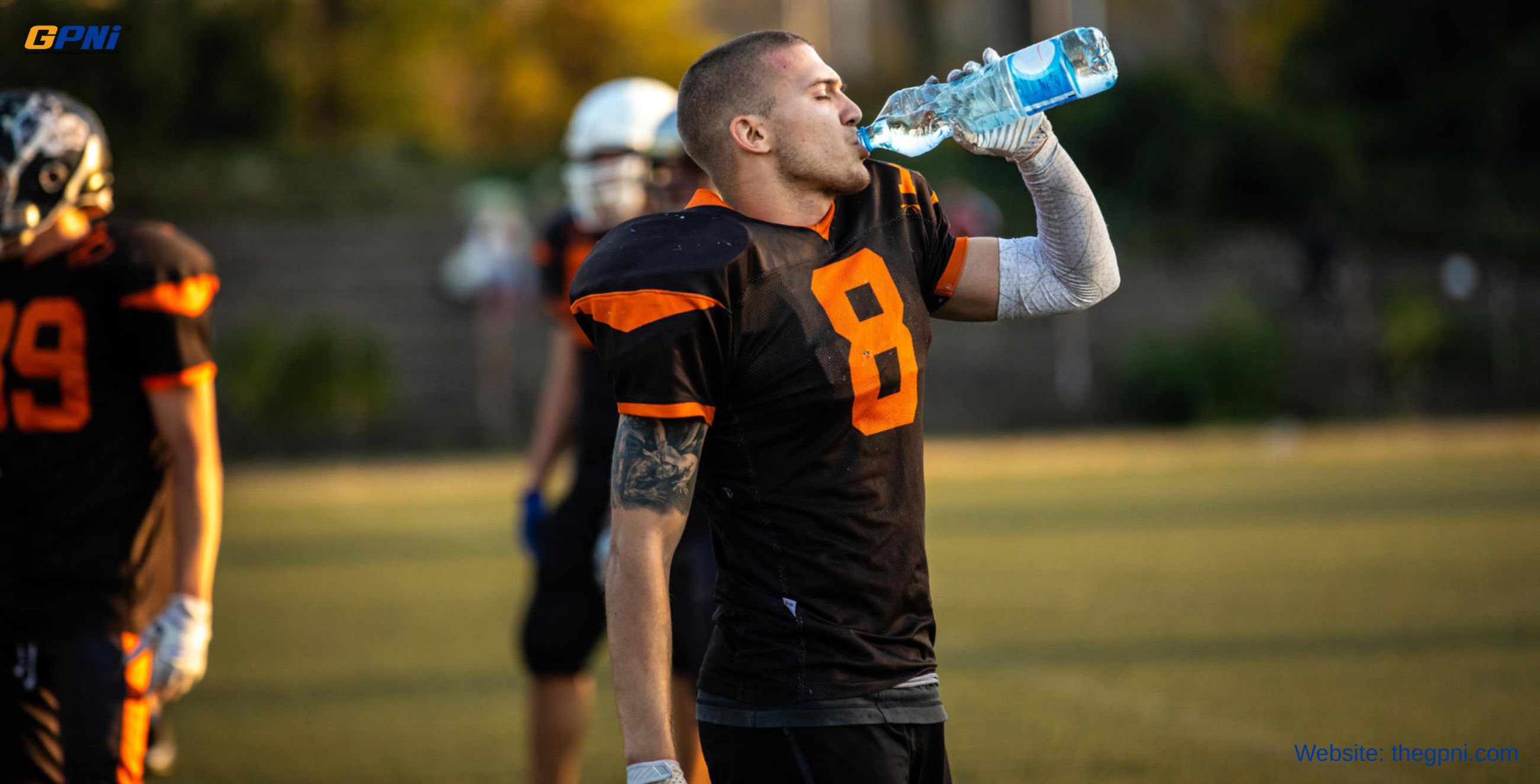
In sport, performance rarely begins when the whistle blows, the gun fires, or the first rep starts.
It begins earlier: in the previous day’s meals, the last hard training session, the athlete’s hydration status, the timing of carbohydrate intake, the tolerance of a supplement, the travel schedule, the climate, and the recovery strategy that came before it.
This is why the recently published review by Michael Gleeson in Performance Nutrition, “The 4Ps framework of nutritional strategies for optimal performance,” is worth attention. The paper organizes key nutrition strategies for the 24–36 hours before competition and during the event itself into four practical pillars: Personalise, Periodise, Prefuel, and Prepare.
From a GPNi perspective, the value of this framework is not that it introduces a brand-new “rulebook.” It does something more useful: it helps coaches, nutrition professionals, and athletes organize what they already know into a competition-ready system.
Sports nutrition often gets reduced to isolated ideas: “take caffeine,” “eat more carbs,” “hydrate better,” “use creatine,” or “don’t try anything new on race day.” Many of those statements can be true in the right context. But a collection of true statements is not the same as a performance strategy.
The 4Ps framework helps move the conversation from scattered advice to structured decision-making.
Why the 4Ps Matter
Many practitioners are already familiar with the 4Rs of recovery nutrition: rehydrate, refuel, repair, and rest or recuperate. The 4Ps can be viewed as the competition-side partner to that recovery framework. The 4Rs ask: How do we restore the athlete after stress? The 4Ps ask: How do we position the athlete to perform before and during the stress?
That distinction matters because performance nutrition is not only about what happens after training. It is also about what happens before the decisive moment.
For GPNi students and practitioners, this is a useful teaching point: effective sports nutrition is not just knowledge of nutrients. It is the ability to place nutrients into a timeline, a context, and a human athlete.
The best strategy is not necessarily the most complicated one. It is the one that is evidence-based, individualized, tested in training, and simple enough to execute under pressure.
1. Personalise: The Same Plan Does Not Work for Every Athlete
Personalized nutrition is often misunderstood as “custom macros.” But in performance sport, personalization goes much deeper.
A personalized plan should consider body mass, sex, age, training status, sweat rate, biomarkers, event demands, travel, environment, food preferences, gastrointestinal tolerance, supplement response, and the athlete’s actual ability to follow the plan. Gleeson’s review also notes that modern elite sport is gradually moving away from generic nutrition advice toward strategies that reflect the individual athlete and the demands of the sport.
At GPNi, we would emphasize three practical layers of personalization.
First, personalize the target. A marathon runner, tennis player, rugby forward, cyclist, physique athlete, and Olympic weightlifter do not have the same fueling problem. Even within the same sport, playing position, competition duration, tactical demands, and environmental conditions can change the plan.
Second, personalize the athlete’s response. Sweat rate, sodium losses, caffeine sensitivity, gastrointestinal tolerance, and carbohydrate oxidation can vary meaningfully between athletes. That does not mean every athlete needs expensive testing, but it does mean practitioners should stop pretending that one hydration plan, one caffeine dose, or one carbohydrate target fits everyone.
Third, personalize the delivery. Athletes do not eat grams of carbohydrate; they eat meals, gels, drinks, rice, oats, potatoes, pasta, fruit, sports foods, and whatever they can tolerate before competition. A nutrition recommendation is only useful when it can be translated into a real meal at a real time, in a real sporting environment.
This is also where caution is needed. The review discusses emerging tools such as continuous glucose monitoring, sweat testing, biomarker assessment, and genetic testing. Some can be useful in the right context, but the evidence is not equally strong for all of them. Genetic testing in sports nutrition, for example, remains limited for most practical performance decisions.
The GPNi takeaway is simple: use data, but do not worship it. Personalization should make the plan more practical, not more complicated.

2. Periodise: Nutrition Should Follow the Training Plan
Periodized nutrition means that fueling is adjusted according to the goal of the session, the phase of training, and the competition calendar.
This is one of the most important ideas in modern performance nutrition. Athletes do not train the same way every day, so they should not necessarily fuel the same way every day.
For example, some sessions demand high carbohydrate availability because the goal is quality, intensity, tactical sharpness, repeated sprint ability, or race-specific output. Other sessions may be designed to support metabolic adaptation, body composition goals, or lower-intensity work where carbohydrate needs are different.
This aligns with the broader “fuel for the work required” concept, where carbohydrate intake is matched to the demands and purpose of training rather than kept uniformly high or uniformly low. Gleeson’s review highlights that traditional high-carbohydrate recommendations can be useful before competition, but they do not always reflect day-to-day variation in training load or the different goals of each session.
The ISSN position stand on nutrient timing also reinforces the importance of context. It notes that nutrient timing involves methodical planning of whole foods, fortified foods, and supplements, and that adequate energy, carbohydrate, and protein intake remains central to performance and adaptation.
A key point for coaches: periodization is not an excuse for chronic under-fueling.
“Train low” strategies may have a place in selected endurance contexts, but they are not universally appropriate. In team sports, congested schedules, high training loads, adolescent athletes, female athletes at risk of low energy availability, and athletes struggling with recovery, poorly applied carbohydrate restriction can create more problems than benefits.
From a GPNi perspective, periodization should be purposeful, not fashionable. The question is not, “Can we manipulate nutrition?” The question is, “What adaptation or performance outcome are we trying to support?”
3. Prefuel: The Competition Meal Starts the Day Before
Prefueling is the part of the framework most athletes think they understand—until competition exposes the gaps.
The purpose is to ensure that the athlete starts the event with sufficient energy and carbohydrate availability, especially for sports involving prolonged or repeated moderate-to-high-intensity efforts such as football, rugby, cycling, endurance running, tennis, and many field-based sports.
Muscle glycogen remains one of the central performance considerations here. Gleeson’s review notes that carbohydrate intake of roughly 6–10 g/kg body mass per day for 24–36 hours, combined with reduced training load, can help restore glycogen stores before competition. It also summarizes evidence that carbohydrate loading can increase time to exhaustion by about 20% and improve fixed-task endurance performance by roughly 2–3%.
But again, the GPNi interpretation is not “everyone must carb-load aggressively.”
A 5K runner, a sprinter, a recreational lifter, an elite cyclist, and a football player with extra time in stoppages do not have the same needs. The goal is to understand the event demand and build the fueling plan backward.
For many athletes, a practical pre-event approach may include a carbohydrate-rich day before competition, a familiar carbohydrate-focused breakfast on the day of competition, and—when timing allows—a higher-glycemic carbohydrate meal about 3–4 hours before warm-up. Gleeson’s review discusses a pre-event meal containing about 1–3 g/kg body mass of carbohydrate, often with modest protein and lower fat and fiber to support gastrointestinal comfort.
This is where sports nutrition becomes highly practical. The athlete does not need an impressive spreadsheet if the plan fails because the hotel breakfast is unsuitable, the meal is too high in fiber, the athlete feels bloated, or the timing is unrealistic.
Prefueling should be rehearsed. The gut is part of the performance system.
4. Prepare: Race-Day Details Should Not Be Improvised
Prepare is the pillar that brings competition-day execution together: hydration, acute supplement use, last-minute carbohydrate intake, and in-event fueling.
Hydration is the first part. Gleeson’s review suggests that drinking about 7 mL/kg body mass of fluid 2–3 hours before an event is typically enough to help an athlete begin competition well hydrated, while in-event fluid intake should generally aim to prevent body mass losses greater than about 2%, especially in prolonged or hot conditions.
But hydration cannot be separated from context. Sweat rate, climate, clothing, exercise intensity, body size, sport rules, and drinking opportunities all matter. A marathon runner, a soccer player, and a tennis player may all need fluid strategies, but they do not have the same access to fluid during competition.
The second part is supplement use.
The review identifies caffeine, nitrate, and sodium bicarbonate as acute pre-event supplements with supportive evidence in selected contexts. Caffeine remains one of the most widely supported ergogenic aids. The ISSN position stand reports that caffeine can improve many aspects of exercise performance in many, though not all, studies, with commonly effective intakes around 3–6 mg/kg body mass, and 60 minutes pre-exercise being a common timing strategy. It also stresses individual variation and possible side effects, including sleep disruption and anxiety.
Sodium bicarbonate is another example of why personalization matters. The ISSN position stand reports benefits in high-intensity efforts, especially those lasting roughly 30 seconds to 12 minutes, but gastrointestinal side effects can negatively affect performance. The paper identifies 0.2 g/kg as a minimum effective single dose in many cases and 0.3 g/kg as a commonly supported dose, while also noting that timing and side-effect management should be individualized.
Creatine and beta-alanine are different. They are not true “take it once before competition” strategies. Creatine works through repeated intake that increases intramuscular creatine stores, supporting high-intensity exercise performance and training adaptations.

This distinction is important in practice. Many athletes use “pre-workout” products that combine multiple ingredients, but a long ingredient list is not the same as a scientifically supported strategy. The real question is not whether a product looks advanced. The question is whether the active ingredients, dose, timing, athlete tolerance, and competition context make sense.
Finally, Prepare includes carbohydrate during competition. For events longer than about 30–45 minutes, carbohydrate feeding can support endurance capacity and performance. Gleeson’s review summarizes a practical range from 30–90 g/hour, depending on duration, intensity, sport rules, and athlete tolerance, with intakes above 60 g/hour generally requiring multiple transportable carbohydrate sources and prior gut training.
From a GPNi perspective, this is one of the most actionable lessons in the paper: competition fueling should not be discovered during competition. It should be trained, refined, and made boringly reliable.
What the 4Ps Framework Gets Right
The biggest strength of the 4Ps framework is that it does not treat performance as a single-nutrient problem.
It brings together food, fluids, supplements, timing, individual response, and competition demands. That is exactly how sports nutrition should be taught and practiced.
For athletes, the message is clear: do not leave race-day nutrition to chance.
For coaches, it means nutrition needs to be integrated into the training plan earlier, not added as an afterthought the night before competition.
For nutrition professionals, it reinforces the need for both evidence and judgment. The numbers matter, but so do the athlete’s event, gut, schedule, preferences, history, and stress level.
For brands and product developers, the lesson is equally important. The future of performance nutrition is not ingredient stacking. It is scenario-based problem solving. A product only has value if it fits into a real strategy: before training, before competition, during endurance work, between matches, in heat, during travel, or in recovery.
What Practitioners Should Be Careful About
The 4Ps framework is useful, but it should not be applied mechanically.
First, it is a narrative, framework-based review. That makes it valuable for synthesis and education, but it is not the same as a sport-by-sport clinical protocol. Practitioners still need to interpret the evidence through the athlete’s context.
Second, some strategies have stronger evidence in endurance and intermittent high-intensity sports than in short-duration power events. A high carbohydrate plan that is critical for a long race may be less relevant for a single short explosive effort.
Third, supplement strategies require ethical and safety awareness. Athletes should consider third-party testing, anti-doping risk, medical conditions, medication interactions, and governing-body rules. “Evidence-based” does not mean “appropriate for everyone.”
Fourth, execution is often the limiting factor. A perfect plan that an athlete cannot tolerate, afford, access, or remember under pressure is not a perfect plan.
This is where education matters.
GPNi’s role as an ISSN-recognized education partner is built around translating sports nutrition science into structured learning and real-world application, including pathways such as PNE Level-1 + ISSN-SNS and PNE Level-2 Masters + ISSN-CISSN.
The best practitioners are not those who memorize the most numbers. They are the ones who know when, why, and how to use them.
Final Takeaway
The 4Ps framework gives sports nutrition professionals a practical way to organize the final 24–36 hours before competition and the event itself.
Personalise the plan to the athlete.
Periodise nutrition around training and competition goals.
Prefuel to begin with adequate energy and glycogen availability.
Prepare hydration, supplements, and in-event fueling before the pressure arrives.
From a GPNi perspective, this framework is valuable because it reflects what high-quality sports nutrition should look like: evidence-based, individualized, periodized, practical, and tested before it matters.
Performance is not created by one meal, one gel, one supplement, or one last-minute decision.
It is built through a sequence of small, intentional choices—made early enough to matter.
References
Bonilla, D. A., Pérez-Idárraga, A., Odriozola-Martínez, A., & Kreider, R. B. (2020). The 4R’s framework of nutritional strategies for post-exercise recovery: A review with emphasis on new generation of carbohydrates. International Journal of Environmental Research and Public Health, 18(1), 103. doi:10.3390/ijerph18010103.
Gleeson, M. (2026). The 4Ps framework of nutritional strategies for optimal performance. Performance Nutrition, 2, Article 6. doi:10.1186/s44410-026-00022-0.
Guest, N. S., VanDusseldorp, T. A., Nelson, M. T., Grgic, J., Schoenfeld, B. J., Jenkins, N. D. M., Arent, S. M., Antonio, J., Stout, J. R., Trexler, E. T., Smith-Ryan, A. E., Goldstein, E. R., Kalman, D. S., & Campbell, B. I. (2021). International society of sports nutrition position stand: Caffeine and exercise performance. Journal of the International Society of Sports Nutrition, 18, Article 1. doi:10.1186/s12970-020-00383-4.
Grgic, J., Pedisic, Z., Saunders, B., Artioli, G. G., Schoenfeld, B. J., McKenna, M. J., Bishop, D. J., Kreider, R. B., Stout, J. R., Kalman, D. S., Arent, S. M., VanDusseldorp, T. A., Lopez, H. L., Ziegenfuss, T. N., Burke, L. M., Antonio, J., & Campbell, B. I. (2021). International Society of Sports Nutrition position stand: Sodium bicarbonate and exercise performance. Journal of the International Society of Sports Nutrition, 18, Article 61. doi:10.1186/s12970-021-00458-w.
International Society of Sports Nutrition. (n.d.). ISSN recognized partners.
Kerksick, C. M., Arent, S., Schoenfeld, B. J., Stout, J. R., Campbell, B., Wilborn, C. D., Taylor, L., Kalman, D., Smith-Ryan, A. E., Kreider, R. B., Willoughby, D., Arciero, P. J., VanDusseldorp, T. A., Ormsbee, M. J., Wildman, R., Greenwood, M., Ziegenfuss, T. N., Aragon, A. A., & Antonio, J. (2017). International society of sports nutrition position stand: Nutrient timing. Journal of the International Society of Sports Nutrition, 14, Article 33. doi:10.1186/s12970-017-0189-4.
Kreider, R. B., Kalman, D. S., Antonio, J., Ziegenfuss, T. N., Wildman, R., Collins, R., Candow, D. G., Kleiner, S. M., Almada, A. L., & Lopez, H. L. (2017). International Society of Sports Nutrition position stand: Safety and efficacy of creatine supplementation in exercise, sport, and medicine. Journal of the International Society of Sports Nutrition, 14, Article 18. doi:10.1186/s12970-017-0173-z.













 Instagram
 Facebook
 YouTube
 Twitter
 Linkedin