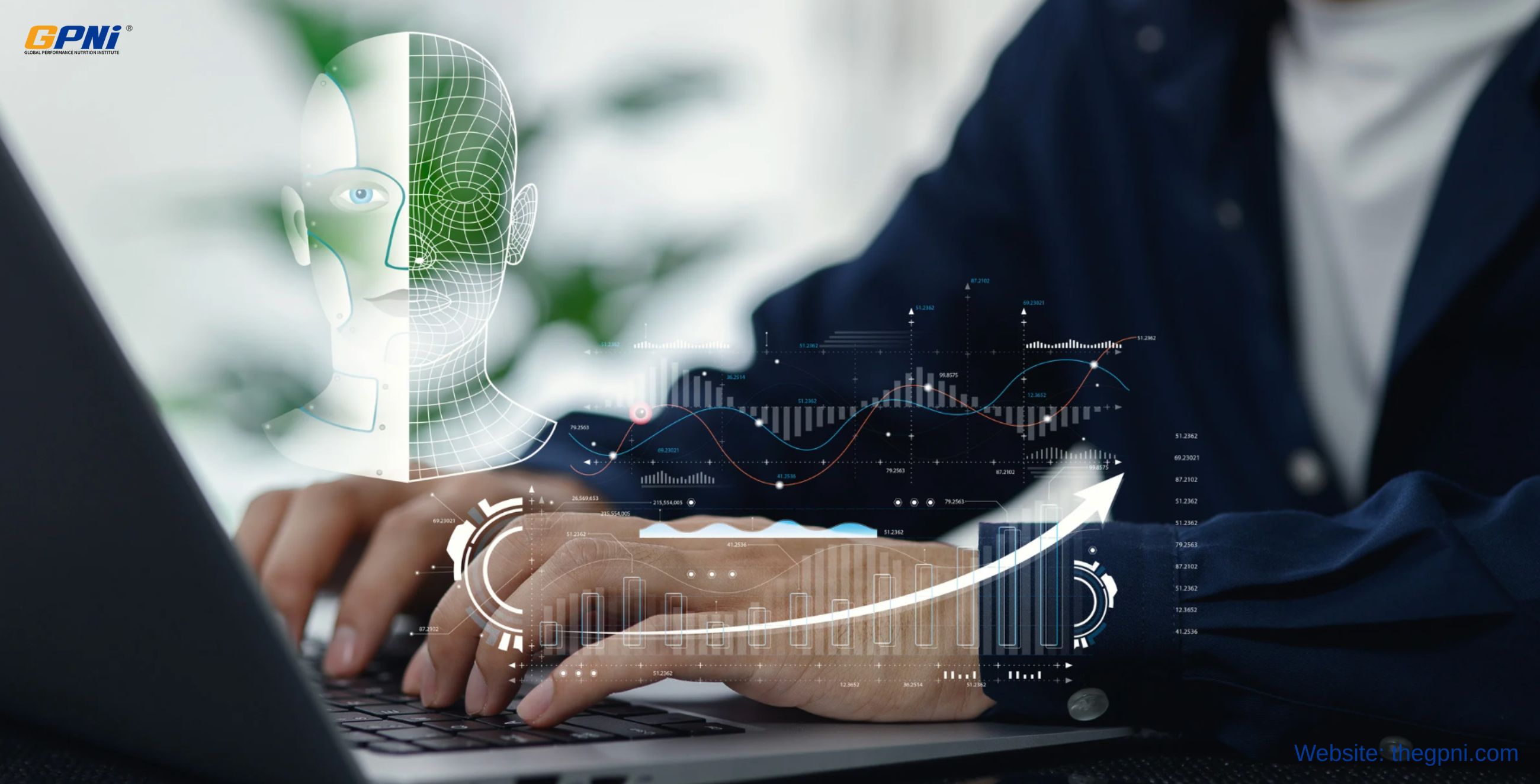
Artificial intelligence is no longer a futuristic talking point. It is already sitting inside the tools many athletes, coaches, dietitians, and fitness professionals use every day.
A client can upload a food photo and receive a calorie estimate within seconds. A coach can ask ChatGPT to draft a seven-day meal plan for a strength athlete. A sports nutritionist can use AI to summarize a research paper, compare supplement protocols, organize client notes, or turn a complex topic into an easy-to-read educational post.
In other words, AI is not coming for sports nutrition. It is already here.
The better question is not whether AI will change the profession. It will. The real question is this: what parts of sports nutrition can AI support, and what parts still require human expertise?
Recent data from Anthropic’s Economic Index found that AI use leans more toward augmentation than full automation: 57% of use cases involved AI collaborating with or enhancing human capability, while 43% involved automation of tasks. That distinction matters. In sports nutrition, the future is unlikely to be “AI versus the practitioner.” It is much more likely to be AI plus the practitioner—with the best results coming from professionals who know how to use the technology without surrendering their judgment to it.
AI Is Powerful—but It Is Not a Sports Nutritionist
AI can process information at a speed no human can match. It can generate meal ideas, compare nutrient targets, scan large datasets, draft content, and help identify patterns in client behavior. But speed is not the same as accuracy, and information is not the same as wisdom.
That distinction becomes especially important in nutrition.
A 2025 study in Nutrients compared diet plans generated by Gemini, Microsoft Copilot, and ChatGPT 4.0. The results were encouraging: the AI-generated plans generally achieved satisfactory overall diet quality. However, the weakest area across the tools was macronutrient and fatty acid balance—exactly the kind of detail that can matter in performance nutrition, body composition work, and athlete health. The authors concluded that AI tools should enhance, not replace, dietetic professionals.
Another 2025 study evaluated ChatGPT-4’s ability to estimate nutrient content from meal photographs. ChatGPT performed well at identifying foods, but it underestimated the weight of medium and large meals and therefore underestimated many nutrients. Across 114 meal photographs, it underestimated meal weight in 76.3% of cases.
That is not a small issue. For a recreational client, a calorie estimate that is “close enough” may be useful. For an athlete in a weight-class sport, a physique competitor, an endurance athlete managing glycogen availability, or a football player trying to gain lean mass without excessive fat gain, small errors repeated over weeks can become meaningful.
AI can also struggle when cases become more complex. In one study assessing ChatGPT’s dietary advice for non-communicable diseases, the tool performed reasonably well for general guidance, but showed clear limitations when multiple health conditions were present at the same time. The authors concluded that ChatGPT could not replace a healthcare professional with nutrition expertise.
That is the line sports nutrition professionals need to understand. AI is useful for first drafts, pattern recognition, education, and efficiency. It is not yet reliable enough to be the final decision-maker.
Where AI Can Help Sports Nutrition Professionals
Used responsibly, AI can make the day-to-day work of a sports nutritionist or coach faster, more organized, and more scalable.
1. Building the First Draft of a Nutrition Plan
AI can help create a starting point: meal ideas, grocery lists, recipe variations, travel-day options, hydration reminders, and macro-based structures.
For example, instead of asking:
“Make me a meal plan.”
A better prompt would be:
“Create a seven-day meal plan for a 75 kg male recreational runner training five days per week. Goal: maintain body weight while improving recovery. Include approximately 1.6 g/kg/day protein, carbohydrate emphasis around training sessions, three meals and two snacks per day, Mediterranean-style foods, and practical options for two work-travel days.”
The difference is context. AI performs better when the professional provides the framework.
But even then, the plan needs review. Does it match the athlete’s schedule? Does it fit their appetite? Is the fiber load appropriate before training? Are the protein servings realistic? Does it respect food culture, allergies, budget, cooking skills, and access to ingredients?
That is where the human professional adds value.
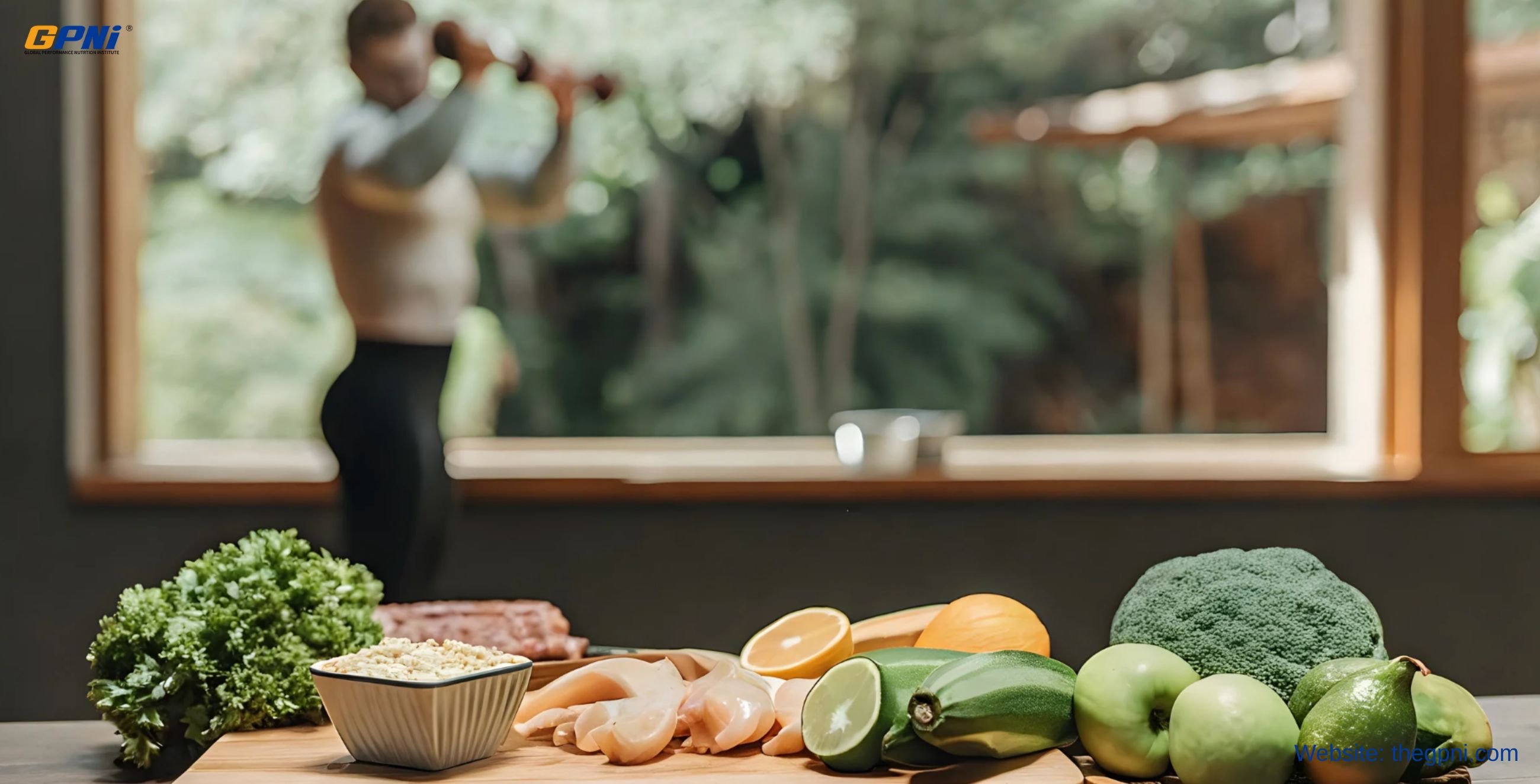
2. Analyzing Client Data More Efficiently
Sports nutrition practice often involves messy information: food logs, body weight trends, training loads, sleep data, supplement routines, gastrointestinal symptoms, hydration habits, and subjective feedback.
AI can help organize these inputs. It can summarize three weeks of food logs, highlight repeated low-protein breakfasts, flag inconsistent fueling around training, or turn client check-ins into a progress report.
This can free the practitioner from administrative overload and allow more time for interpretation, education, and coaching.
The key word is interpretation. AI can identify patterns, but the practitioner must decide what they mean. A low-carbohydrate day may be a problem for one athlete and intentional periodized fueling for another. A drop in body weight may be positive for one client and a warning sign for another. Context changes everything.
3. Monitoring Progress with Wearables and Apps
Wearables and nutrition apps are now part of the performance landscape. They can track sleep, heart rate, training volume, energy expenditure estimates, menstrual cycle data, hydration reminders, and recovery indicators.
AI can help connect those data points and provide alerts. For example: “Protein intake has been below target for four days,” or “Sleep duration dropped during the highest training-load week,” or “Carbohydrate intake appears low before long sessions.”
That can be useful. But wearable and health data also raise privacy, accuracy, and bias concerns. Research on AI and wearable sensors highlights risks around sensitive health data, cybersecurity, algorithmic bias, and over-reliance on automated recommendations.
For sports professionals, this means AI-powered tracking should be handled with clear consent, data minimization, and professional boundaries. Just because a tool can collect data does not mean every data point should be collected.
4. Supporting Injury Prevention and Recovery
AI can help identify early signs of fatigue, insufficient recovery, or mismatch between training stress and nutritional support. In theory, this could support better decisions around energy availability, protein timing, hydration, micronutrient risk, and return-to-play planning.
But recovery is not only a data problem. Pain, stress, motivation, appetite, fear of reinjury, team pressure, travel, and sleep quality all matter. A practitioner who understands the athlete as a person—not just a dashboard—can make better decisions than a system that only sees numbers.
5. Creating Better Educational Content
For coaches and nutritionists trying to grow their business, content matters. AI can help draft blog posts, social media captions, newsletters, webinar outlines, FAQs, and client handouts.
But AI-generated content often sounds polished and empty unless a professional adds real-world experience. The best content still comes from human judgment: case examples, practical coaching language, nuance, and the ability to say, “Here is what this looks like in real life.”
AI can help write. It cannot replace having something worth saying.
6. Learning Faster
AI can also be a powerful learning companion. It can summarize papers, explain unfamiliar terminology, compare study designs, generate quiz questions, or help map a topic from beginner to advanced.
However, professionals should treat AI summaries as a starting point, not a final source. Scientific literacy still matters. The ability to read methods, understand limitations, compare evidence, and apply research in context is what separates a certified professional from someone simply repeating a chatbot response.
The Human Edge: What AI Still Cannot Do Well
The most valuable sports nutrition professionals are not valuable because they can calculate macros. AI can do that.
They are valuable because they can combine science with judgment, communication, ethics, and behavior change.
AI does not truly understand a client’s history with food. It does not notice hesitation in a voice. It does not know when an athlete is underreporting intake because they are embarrassed. It does not build trust over months. It does not sit with a young athlete who is anxious about body composition. It does not understand team culture, family pressure, religious food practices, travel fatigue, or the emotional side of performance.
Sports nutrition is not just about giving the “correct” plan. It is about helping people follow the right plan at the right time, for the right reason.
That requires empathy. It requires coaching. It requires professional accountability.
How to Use AI Responsibly in Sports Nutrition
A practical approach is to treat AI like a highly capable assistant—not like a licensed professional, not like a mentor, and not like the final authority.
Before using AI with clients or athletes, sports nutrition professionals should keep three principles in mind.
First, review everything. AI outputs should be checked against current evidence, scope of practice, client goals, medical history, and sport-specific needs.
Second, protect client privacy. Avoid uploading identifiable health information, private photos, medical records, or sensitive athlete data into tools unless the platform, consent process, and data policies are appropriate.
Third, stay inside your scope. General sports nutrition education is different from medical nutrition therapy. ISSN notes that while personal trainers can provide general sports nutrition information for performance and body composition, professionals should check local laws before providing nutrition guidance involving medical conditions.
The Future Belongs to AI-Literate Professionals
AI will not make sports nutrition professionals irrelevant. But it will change what “competent” looks like.
The next generation of successful practitioners will need to understand both nutrition science and digital tools. They will know how to prompt AI, question AI, audit AI, and translate AI-generated insights into practical human coaching.
That combination is powerful.
A practitioner who ignores AI may become slower than the industry around them. But a practitioner who blindly trusts AI may become unsafe. The advantage belongs to those who can use technology without losing professional judgment.
GPNi has always worked globally with leading sports nutrition experts, coaches, and performance professionals. Through programs such as the PNE Level-1 + ISSN-SNS Double Certification, students build a strong foundation in sports nutrition science, practical application, supplementation, research interpretation, and career-ready skills. PNE Level-1 + ISSN-SNS program is positioned as a foundation certification and stepping stone toward more advanced sports nutrition education, while the ISSN recognizes GPNi’s double-certification pathways for SNS® and CISSN® preparation.
AI can help us move faster. But the steering wheel still belongs in human hands.
For sports nutritionists, coaches, and fitness professionals, the challenge is not to compete with AI. The challenge is to become the kind of professional AI cannot replace: evidence-based, ethically grounded, culturally aware, emotionally intelligent, and skilled enough to turn information into results.
References
Anthropic. (2025, February 10). The Anthropic Economic Index. https://www.anthropic.com/news/the-anthropic-economic-index
Kaya Kaçar, H., Kaçar, Ö. F., & Avery, A. (2025). Diet quality and caloric accuracy in AI-generated diet plans: A comparative study across chatbots. Nutrients, 17(2), 206. https://doi.org/10.3390/nu17020206
O’Hara, C., Kent, G., Flynn, A. C., Gibney, E. R., & Timon, C. M. (2025). An evaluation of ChatGPT for nutrient content estimation from meal photographs. Nutrients, 17(4), 607. https://doi.org/10.3390/nu17040607
Ponzo, V., Goitre, I., Favaro, E., Merlo, F. D., Mancino, M. V., Riso, S., & Bo, S. (2024). Is ChatGPT an effective tool for providing dietary advice? Nutrients, 16(4), 469. https://doi.org/10.3390/nu16040469
Radanliev, P. (2025). Privacy, ethics, transparency, and accountability in AI systems for wearable devices. Frontiers in Digital Health, 7, 1431246. https://doi.org/10.3389/fdgth.2025.1431246
International Society of Sports Nutrition. (n.d.). ISSN’s Sports Nutrition Specialist Certification. Retrieved April 27, 2026, from https://www.sportsnutritionsociety.org/SNS.html









 Instagram
 Facebook
 YouTube
 Twitter
 Linkedin