Peptides are no longer a niche topic discussed only in specialist clinics or high-performance circles.
They are now part of everyday conversations in fitness, weight management, recovery, wellness, anti-aging, and body composition. Some of that attention is connected to legitimate medical and scientific developments. Some of it is driven by aggressive marketing, anecdotal claims, gray-market products, and consumer-facing hype that moves faster than the evidence.
That is exactly why this conversation matters.
As interest in peptides continues to grow, athletes, coaches, nutrition professionals, and health-focused consumers need more than another trend-based discussion. They need a clearer framework for asking better questions:
- What is actually supported by evidence?
- What belongs in a medical or regulatory category?
- What may create anti-doping risk?
- What should fitness professionals know before discussing these products with clients?
- And where does nutrition still fit into the picture?
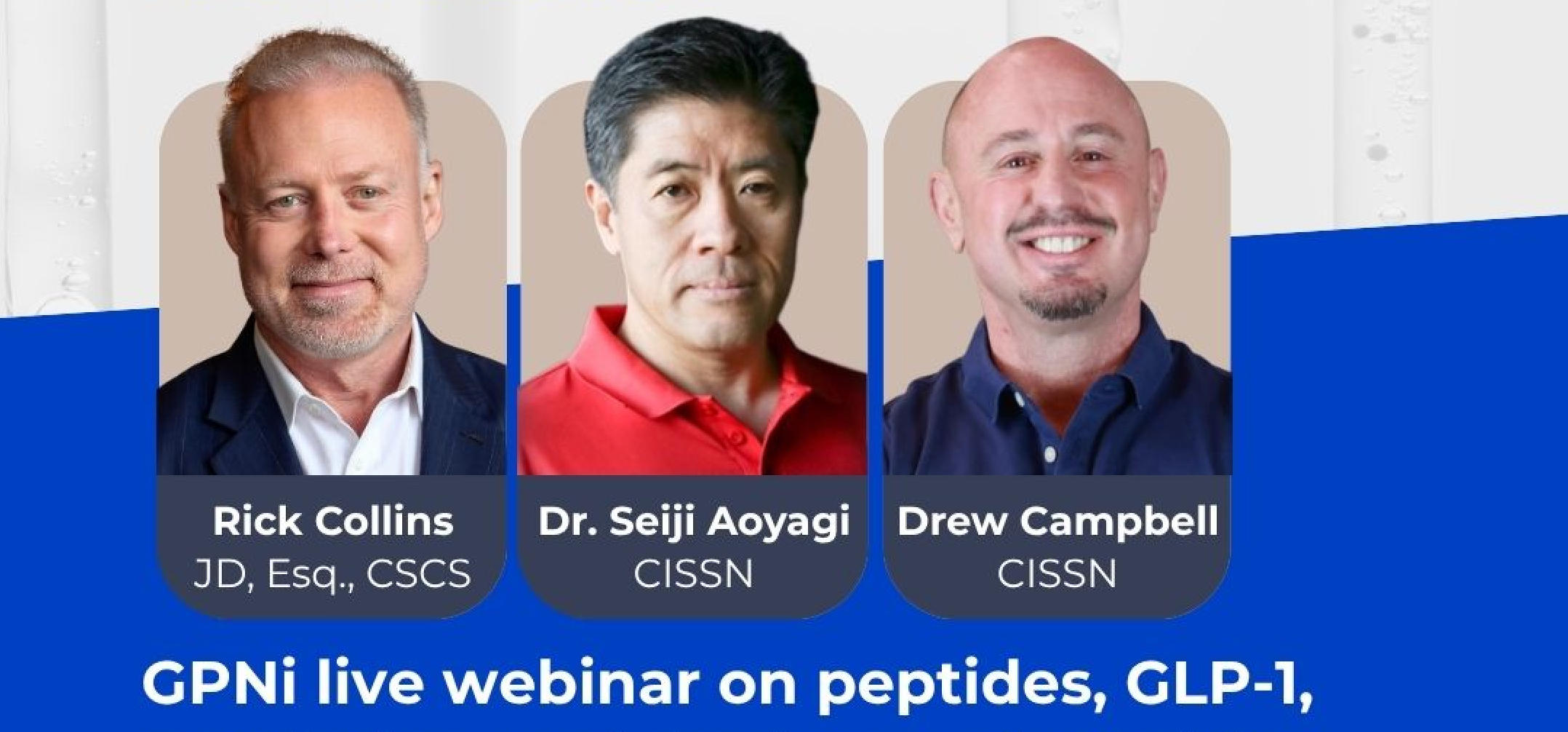
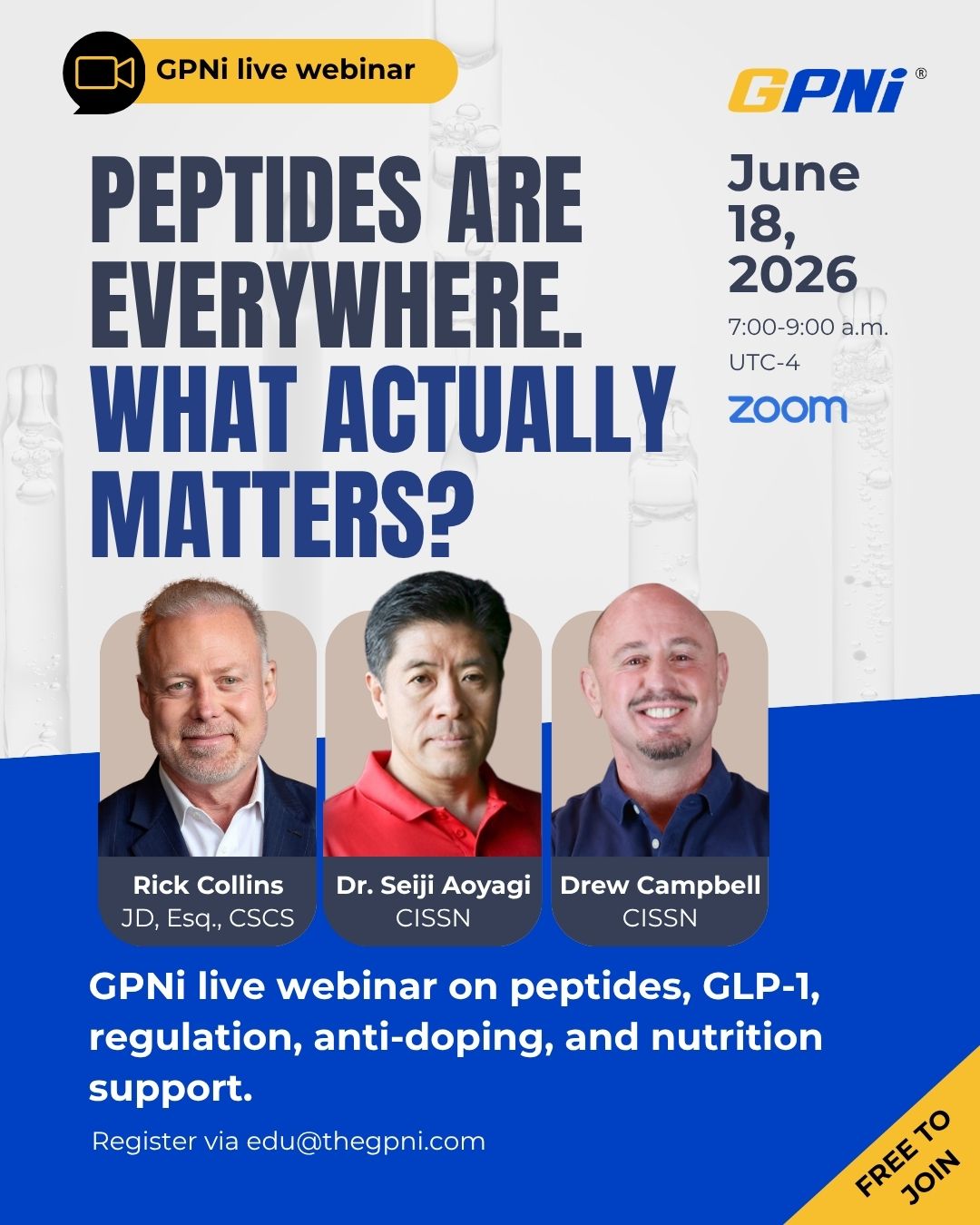
To address these questions, GPNi will host a free live online webinar on June 18, 2026, during the ISSN 2026 Conference. The session will bring together three experts to examine peptides, GLP-1 therapies, and nutrition support from legal, scientific, and applied performance perspectives. The webinar will be moderated by Drew Campbell, Co-Founder and CEO of GPNi, and will include expert presentations followed by a roundtable discussion and live audience Q&A.
Event Details
GPNi June Live Webinar: Peptides
Date: June 18, 2026
Time: 7:00 am – 9:00 am, Florida time, UTC-4
Platform: Live worldwide on Zoom
Cost: Free to attend
CEC: GPNi 5 CECs
👉 Register here. For any inquiries, please contact edu@thegpni.com.
Why This Webinar Is Different
This is not a “peptide hype” webinar.
The goal is not to promote peptide use, oversimplify risk, or turn complex regulatory and medical questions into social media talking points. Instead, GPNi is bringing together three perspectives that are often discussed separately but rarely placed in the same conversation:
- Legal and regulatory clarity
- Nutrition-first performance support
- GLP-1 therapy and metabolic health nutrition
That structure matters because “peptides” is not one simple category. It includes FDA-approved medications such as semaglutide and tirzepatide, naturally occurring peptide hormones like insulin and human growth hormone, traditional peptide-containing nutrition products such as hydrolyzed collagen, and a wide range of unapproved injectable or “research use only” products promoted across wellness and performance markets.
For professionals working in sport, fitness, health, nutrition, or body composition, the challenge is no longer just knowing that peptides are popular. The challenge is knowing how to evaluate them responsibly.
Speaker 1: Rick Collins, JD, Esq., CSCS
A Deep Dive into the Peptide Revolution

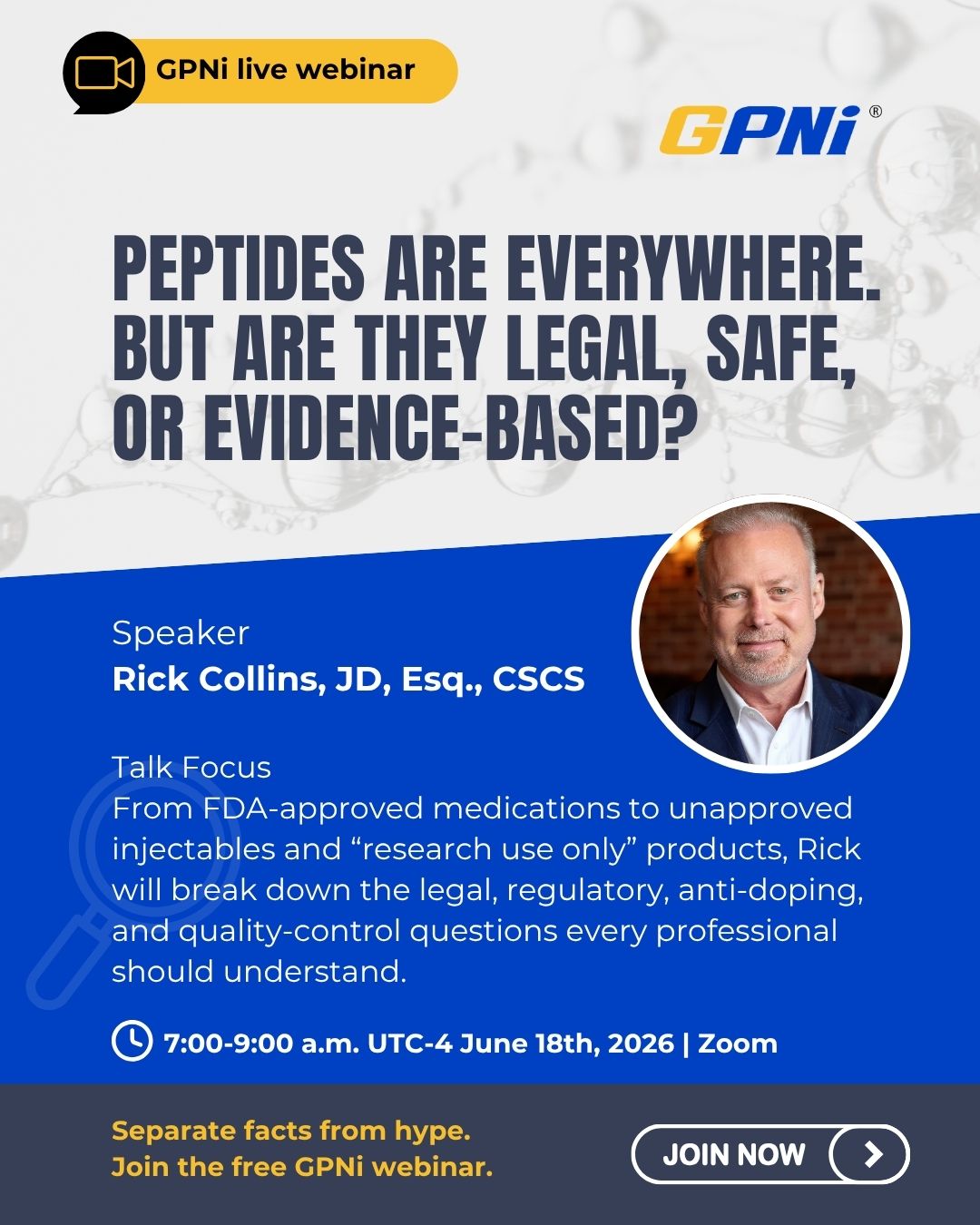
Rick Collins is internationally recognized as one of the leading legal authorities in the dietary supplement and sports nutrition field. He is a partner at Collins Gann McCloskey & Barry PLLC, longtime General Counsel to the ISSN, and official legal advisor to the IFBB Pro League. His background also includes work as an NSCA Certified Strength and Conditioning Specialist, former personal trainer, and former competitive bodybuilder.
Rick’s presentation will examine the peptide market from a legal, regulatory, and consumer-protection perspective.
His session will help attendees understand why the word “peptide” can refer to very different things. Some peptides are approved drugs. Some are compounds still being studied. Some have not undergone the type of human research required for drug approval. Others are sold online as “research chemicals” or appear in consumer products despite uncertain legal and safety status.
Rick will address practical questions such as:
- Where do peptides fit within food, supplement, and drug regulation?
- What is driving their explosive popularity?
- What risks come with “not for human use” research products?
- How do peptide-related products intersect with anti-doping rules?
- How much evidence supports the claims being made?
- What quality-control concerns should consumers and professionals understand?
- Where might FDA enforcement and regulation be heading next?
For coaches, practitioners, and educated consumers, this session is about developing better judgment—not simply learning more compound names.
Speaker 2: Dr. Seiji Aoyagi, CISSN
Optimizing GLP-1 Therapy: The Critical Role of Nutrition in Metabolic Health
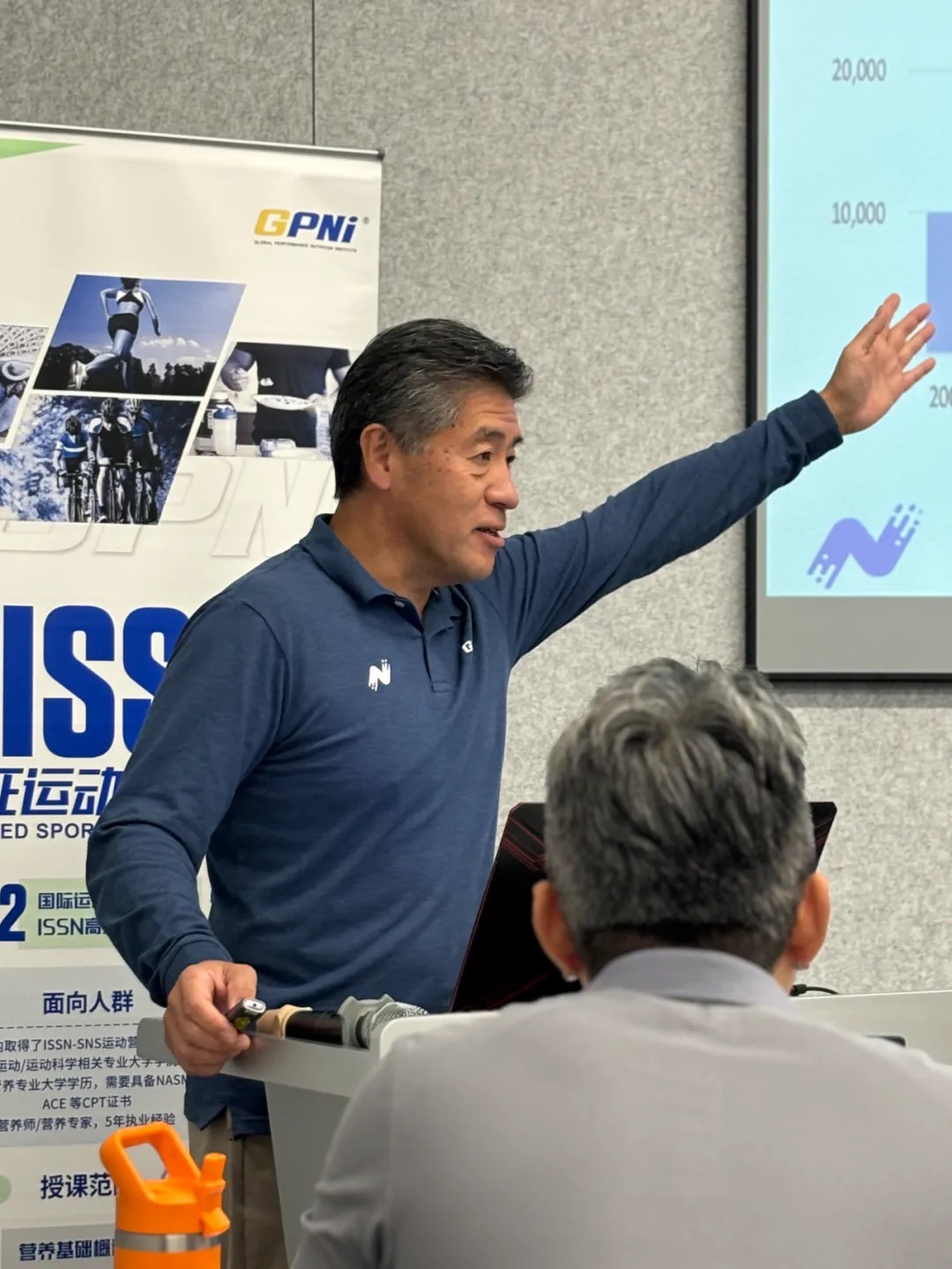
Dr. Seiji Aoyagi is Chief Science Officer of NiHTEK and an owner and partner of GPNi Japan. He has more than 30 years of experience in nutrition and supplements across clinical and sports nutrition, has published extensively in the United States and Japan, contributed to book chapters, and holds four nutrition patents. He also helped secure approval for HMB as a supplement in Japan and played a leading role in introducing Informed-Choice to Japan.
Seiji’s presentation focuses on one of the most visible peptide-related topics in modern health and weight management: GLP-1 receptor agonists.
Medications such as semaglutide and tirzepatide have become major tools in the treatment of type II diabetes and obesity, supporting blood glucose control and meaningful weight loss. However, their use for weight loss in otherwise healthy individuals remains controversial and should occur under appropriate medical supervision with careful consideration of risks, benefits, and long-term implications.
Seiji will focus on what often happens after appetite decreases.
When food intake drops sharply, people may lose weight—but they may also struggle to meet protein needs, consume too few micronutrients, develop imbalanced eating patterns, experience gastrointestinal discomfort, or lose lean mass if nutrition is not managed properly.
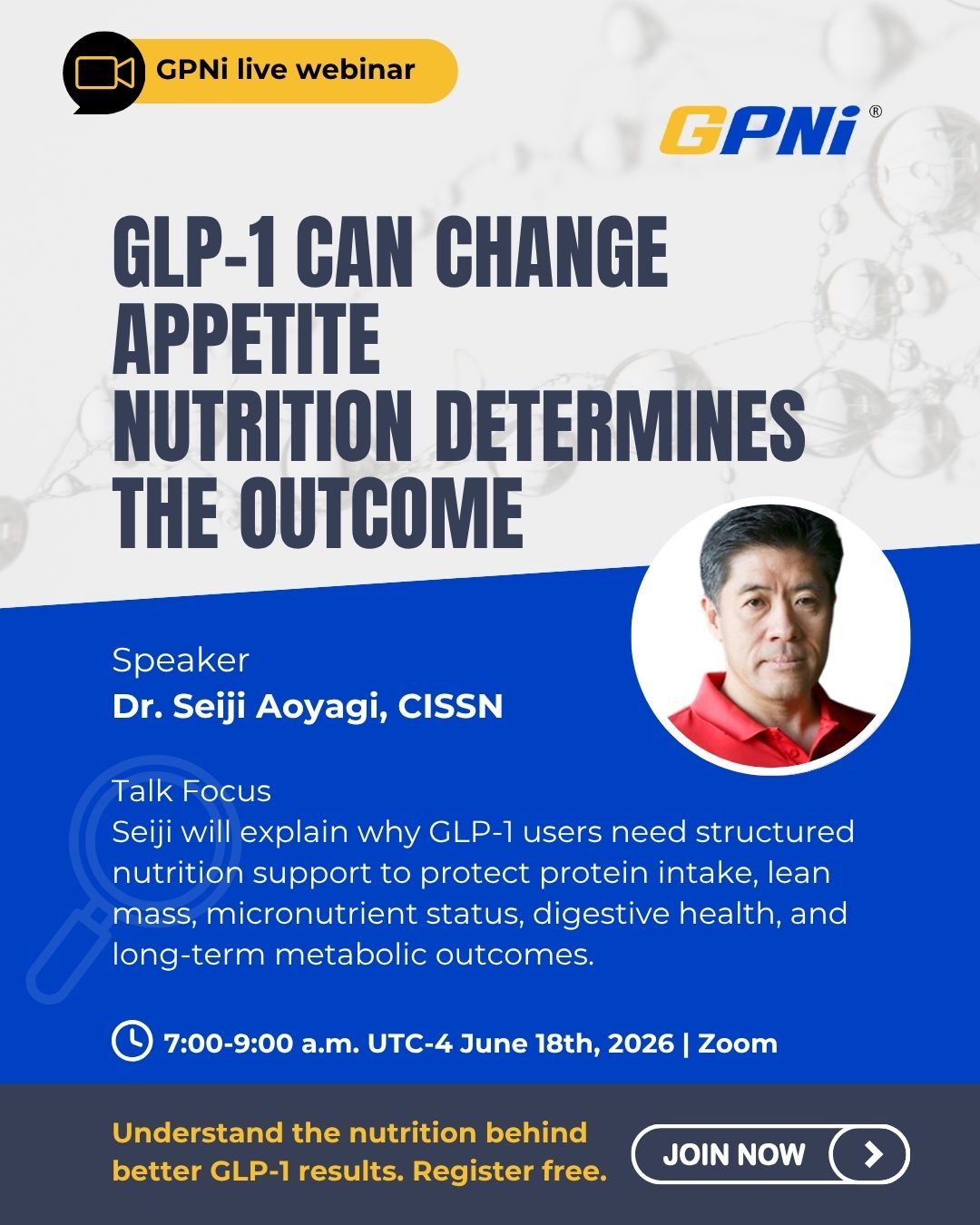
His presentation will explain why nutrition support is essential for GLP-1 users, including:
- Protein strategies to support lean mass retention
- High-quality protein supplements for low appetite or early satiety
- Fiber-rich foods to support digestive health and constipation management
- Nutrient-dense foods to reduce micronutrient deficiency risk
- Supplementation when intake is limited or needs are increased
- Diet structure to support long-term metabolic health
The key message is clear: GLP-1 therapies may change appetite and intake, but nutrition determines the quality of the outcome.
What Attendees Will Take Away
This webinar is designed for people who want a more serious way to think about peptides.
By the end of the session, attendees should have a stronger framework for understanding:
- Which peptide-related conversations are grounded in evidence
- Where regulation, medical supervision, and anti-doping rules matter
- Why unapproved or “research only” products deserve caution
- How nutrition can support or replace some of the goals people associate with peptides
- Why GLP-1 users need structured nutrition support, not just weight-loss monitoring
- How coaches and nutrition professionals can discuss the topic more responsibly
The roundtable discussion will allow Rick, Seiji, and Drew to connect these topics directly: law, science, performance, nutrition, health, and real-world decision-making.
Who Should Attend?
This webinar is especially relevant for:
- Sports nutritionists
- Strength and conditioning coaches
- Personal trainers
- Dietitians and nutrition professionals
- Fitness business owners
- Competitive athletes
- Body composition-focused individuals
- Health professionals interested in peptide and GLP-1 trends
- Educated consumers who want to separate evidence from hype
For many people outside North America, this webinar is also an opportunity to build a more structured understanding of peptides before the topic becomes even louder in local markets.
GPNi is exploring Zoom live captioning and translated caption options to make the event more accessible for a global audience. Depending on platform availability and event settings, this may include real-time subtitles and translated captions in multiple languages.
Attend Online or Join Us In Person at ISSN 2026
This GPNi June Live Webinar will be filmed and streamed live during the ISSN 2026 Annual Conference. While the webinar will be available online via Zoom for a global audience, attendees who are also participating in the ISSN 2026 Conference are welcome to join the session in person.
This provides a unique opportunity to experience the discussion live, interact directly with the speakers, and connect with the GPNi team during one of the leading international events in sports nutrition.
More information about the ISSN 2026 Annual Conference can be found here:
https://www.sportsnutritionsociety.org/ConferencesDetails.php?IDconf=141
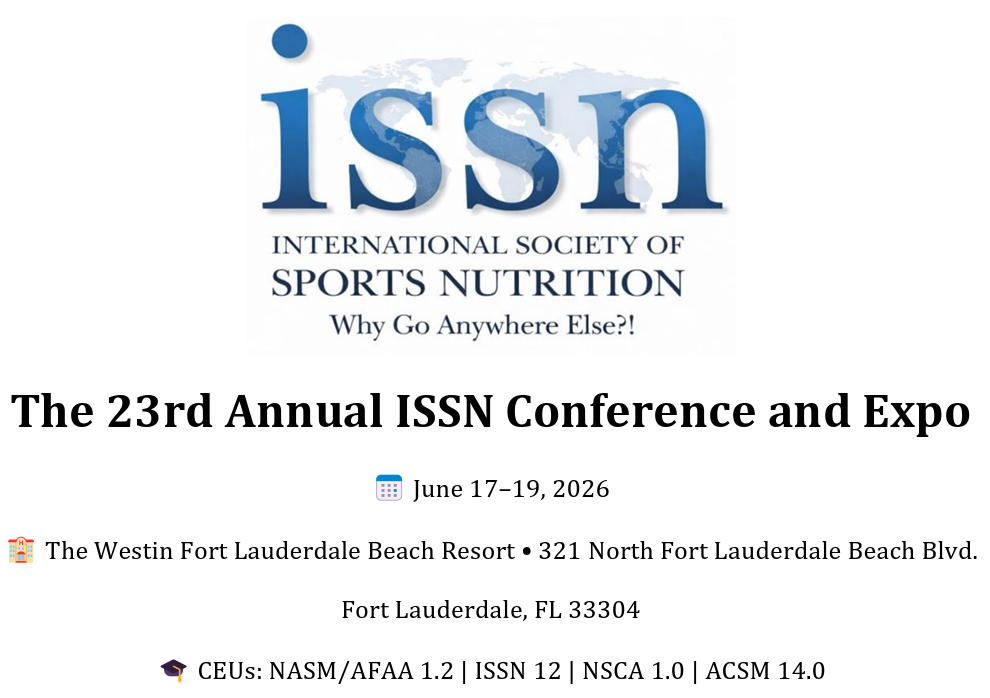
Earn GPNi CECs
Participation in this GPNi webinar can provide 5 GPNi CECs. In addition, attendance at the ISSN 2026 Annual Conference can provide another 5 GPNi CECs. These CECs may be used toward renewing the ISSN-SNS / CISSN certificate.
Final Word
Peptides are not going away.
But as this topic becomes more visible, the fitness and nutrition world needs better questions, stronger frameworks, and more responsible education.
At GPNi, the goal is not to add more noise. The goal is to help professionals and educated consumers think more clearly about regulation, evidence, performance, nutrition, and health.
Attendance is free. 👉 Register here. For any inquiries, please contact edu@thegpni.com.












 Instagram
 Facebook
 YouTube
 Twitter
 Linkedin